
The morning felt calm until the ground moved without warning. Residents in San Ramon stopped what they were doing and looked around their homes as objects rattled lightly. Many reached for their phones to confirm what they felt. Reports soon confirmed a Magnitude 3.3 Earthquake had shaken the region. For some people, it felt like a quick jolt. For others, it felt like a gentle wave passing under their feet. Even though a Magnitude 3.3 Earthquake is considered minor, the event still raised questions about the safety of the region and the future of seismic activity near the city.
When the Ground Reminds Us to Pay Attention
The Magnitude 3.3 Earthquake did not cause damage, but it reminded the community that the Bay Area sits on a network of active faults. Local residents want to understand what the Magnitude 3.3 Earthquake means, why it happened, and how they can stay prepared for future shaking. This blog explores the science, the impact, the context, and the lessons behind the 3.3 Earthquake that rattled San Ramon. The goal is to provide clear, direct information that helps readers feel informed and confident.
What a Magnitude 3.3 Earthquake Means
A Magnitude 3.3 Earthquake falls into the category of “minor earthquakes.” Scientists define it as an event strong enough to be felt by people near the epicenter but not strong enough to create structural damage. A Magnitude 3.3 Earthquake releases energy that registers clearly on local seismic sensors. People often feel light shaking, hear a soft rumble, or notice objects vibrating for a few seconds.
While it does not threaten buildings, it still offers insight into the stress levels inside the Earth’s crust. Every Earthquake records valuable data that helps scientists understand the current behavior of nearby faults. Each small slip shows that pressure is active, changing, or adjusting along fault segments. When a Magnitude 3.3 Earthquake occurs in a populated area like San Ramon, people take notice. They reflect on their emergency plans, and they think about how prepared they are for larger earthquakes.
It is also considered shallow, which makes it easier for people to feel even though it remains weak from a structural standpoint. Many residents describe shaking as a short burst that passes quickly. Some describe it as a wave that feels like the floor rising and settling. These details show how the shaking pattern of a Magnitude 3.3 Earthquake can vary from house to house. Soil type, building height, and distance from the epicenter shape personal experiences during a Magnitude 3.3 Earthquake.
Why San Ramon Feels Earthquakes Like This
San Ramon sits near an active section of the Calaveras Fault. This region experiences small earthquakes many times a year. A Magnitude 3.3 Earthquake may feel surprising to some residents, but scientists know that these events happen because the fault constantly adjusts. When stress builds along the fault, the ground slips slightly, producing earthquakes like the Magnitude 3.3 Earthquake that shook the city.
The geology of San Ramon makes the area sensitive to movement. The valley floor contains soft soils that can amplify shaking from earthquakes. People living closer to the fault line often feel stronger motion during this Earthquake because shallow earthquakes send vibrations directly upward. Even though there is no damage, the event revealed how sensitive the region is to seismic energy.
When a Magnitude 3.3 Earthquake occurs along an active fault, scientists look at patterns. They study how often these quakes happen, how close together they appear, and what direction stress is moving. A Magnitude 3.3 Earthquake can be part of a cluster, or it can be a single isolated event. Clusters reveal fault adjustments happening in small steps. A one-off Magnitude 3.3 Earthquake can show a short shift in stress that does not connect to a larger sequence.
How Residents Experienced the Shaking
People across San Ramon felt the Magnitude 3.3 Earthquake in different ways. Some felt a single jolt. Others felt a light shaking wave. A few heard windows rattle or picture frames clatter. Most described the Magnitude 3.3 Earthquake as brief and mild. Children asked parents what happened. Adults paused conversations. Pets reacted by barking or moving away from shaking furniture.
In many homes, the Magnitude 3.3 Earthquake acted as a reminder to check emergency kits. Parents looked for flashlights. Residents checked water supplies. Some people took the Magnitude 3.3 Earthquake as motivation to drill safety steps with their families. Even minor shaking can help people remember how important readiness truly is.
The emotional response also matters. A Magnitude 3.3 Earthquake can cause anxiety in people who experienced past quakes, including the Loma Prieta quake or Napa quake. Even mild shaking can trigger memories. This emotional layer shows why communities need clear communication after a Magnitude 3.3 Earthquake. People feel safer when they receive simple, direct updates from local officials and scientists.
The Science Behind a Magnitude 3.3 Earthquake
A Magnitude 3.3 Earthquake occurs when two blocks of Earth slip along a fault surface. Stress builds over time due to plate movement. When the stress exceeds friction, the blocks shift suddenly, releasing energy. This energy travels outward as seismic waves. A Magnitude 3.3 Earthquake produces small but noticeable waves that shake the ground for a few seconds.
Scientists use sensors to measure this energy. When a Magnitude 3.3 Earthquake occurs, multiple stations pick up the waves. Then, computers analyze the data and calculate the magnitude. This measurement shows how much energy the Magnitude 3.3 Earthquake released. Scientists then estimate depth, epicenter, and direction of motion. All these details help them understand the fault conditions that triggered the Magnitude 3.3 Earthquake.
The Bay Area uses dense networks of sensors. This system allows scientists to detect every Earthquake and even smaller ones. Each event helps them build a clear model of the fault. A single Earthquake adds to the long-term data that shows how stress moves through the region.
Connection Between Small Quakes and Larger Ones
Many residents want to know if it is increases the chance of a larger earthquake. The answer is usually no. A Magnitude 3.3 Earthquake does not change long-term risk. The area already has a known risk of larger earthquakes because it sits near major fault lines. A Magnitude 3.3 Earthquake does not raise or lower that risk in a meaningful way.
However, a Magnitude 3.3 Earthquake does show that the fault is active. Active faults produce small earthquakes as part of normal behavior. A region with frequent small quakes often releases stress slowly. That means it can be part of a pattern that reduces long-term stress buildup. Scientists still study each Magnitude 3.3 Earthquake to see whether it belongs to a cluster. Clusters sometimes produce sequences that include slightly larger quakes, though they rarely produce large destructive events.
What Local Officials Typically Do After Small Quakes
When a Magnitude 3.3 Earthquake shakes a city, officials evaluate whether the area shows signs of damage or disruption. This is rarely causes structural problems, but officials still check key facilities. They look at roads, bridges, power lines, water systems, and communication systems. Safety crews confirm that the Magnitude 3.3 Earthquake did not disturb foundations or create road cracks.
Officials often send simple reminders after a 3.3 Earthquake. They ask people to prepare emergency kits, secure furniture, and practice safety steps. It provides a natural moment to engage the public in readiness conversations. This helps the city build long-term resilience.
How to Stay Prepared After a Magnitude 3.3 Earthquake
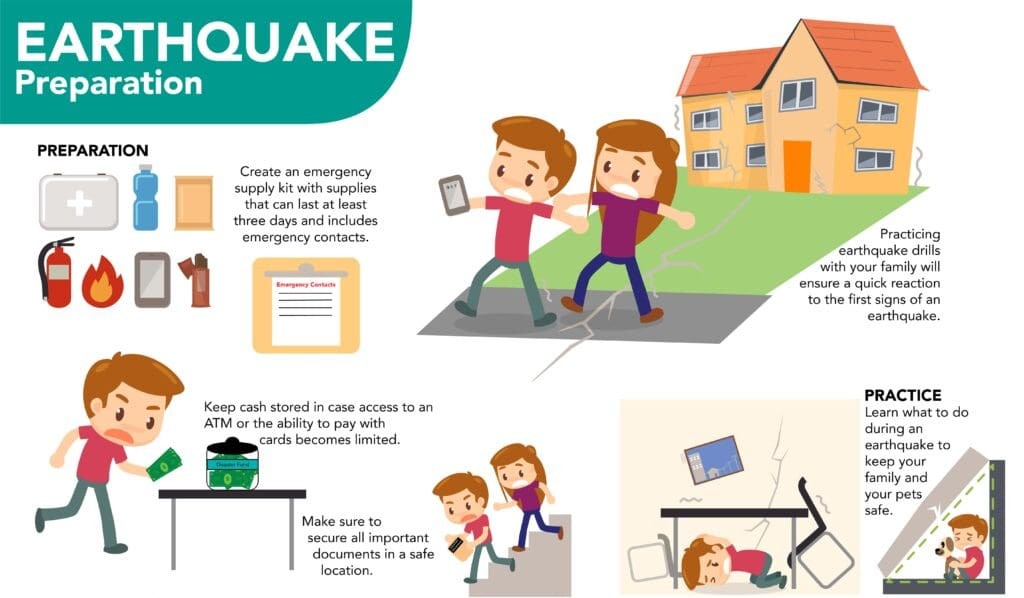
It may not be dangerous, but it encourages people to take small steps that improve safety. Every resident can improve readiness by following simple actions:
1. Create a Family Plan
Families should discuss where to meet after earthquakes. This reminded many people that they need a clear plan.
2. Build or Update an Emergency Kit
After a Magnitude 3.3 Earthquake, many people realize their kit is missing items. A kit should include water, food, lights, and first-aid supplies.
3. Secure Heavy Furniture
It might not topple furniture, but a bigger one could. Securing shelves and cabinets keeps homes safe.
4. Practice Safety Steps
Drop, Cover, and Hold On is the main safety action. This offers a good reason to practice this with children.
5. Stay Informed About Local Alerts
People should use alert apps and local notification systems. These systems provide fast updates before and after events like the 3.3 Earthquake.
Why the Magnitude 3.3 Earthquake Matters for Long-Term Awareness
This teaches the community something useful. It shows that the city sits on active land. It reminds people that earthquakes do not require warnings. It pushes families to look at their safety plans. It gives scientists important data about fault behaviour. An earthquake may be minor, but it plays a major role in public awareness.
Small quakes help communities stay ready. They encourage people to stay alert without creating fear. It makes residents curious about seismic science. This curiosity helps people understand their environment and make smart safety choices.
A Minor Shake With a Major Message
The Earthquake that rattled San Ramon did not damage buildings. It did not last long. It did not create panic. But the 3.3 Earthquake reminded everyone that natural movement continues beneath the city. It encouraged families to talk about readiness. It gave scientists data to study. It pushed residents to think about their homes and their safety.
It is small, but it still matters. It keeps the community aware. It strengthens safety habits. It supports scientific learning. When people treat a Magnitude 3.3 Earthquake as a lesson rather than a threat, they grow more prepared for future events. San Ramon felt a shake, and the message was clear: stay aware, stay calm, and stay ready.
- It is minor but widely felt.
- This Earthquake helped highlight active fault behavior.
- Small events like the 3.3 Earthquake contribute to scientific insight.
- Preparedness steps matter even after small quakes.
- The Magnitude 3.3 Earthquake served as a reminder, not a warning.